If you’re a Florida homeowner, you already painfully know that home-owners insurance isn’t cheap. Thanks…
The Hidden Risk of Cloth Wiring in Mid-Century Homes
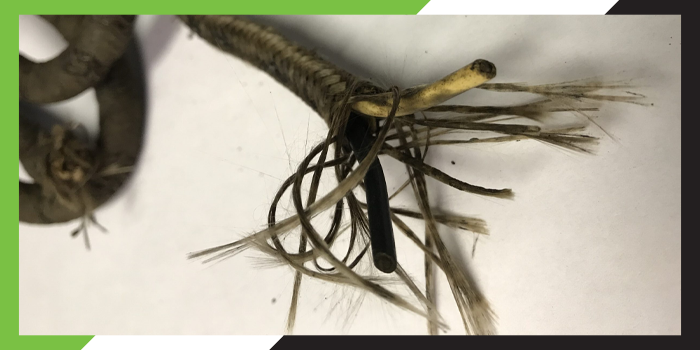
Homes built in the 1940s, 1950s, and early 1960s often carry a certain charm—solid construction, established neighborhoods, and architectural character you just don’t see in newer builds. But behind those walls, there can be an outdated electrical system that poses real concerns: cloth wiring.
Cloth wiring, also known as fabric-insulated wiring, was commonly used before modern plastic insulation became standard. At the time, it was a perfectly acceptable solution. Decades later, however, it has become one of the more common issues we encounter during inspections—and one that no homeowner can afford to ignore.
The primary concern with cloth wiring is deterioration. Unlike modern thermoplastic insulation, the fabric material in cloth wiring becomes brittle over time. Exposure to heat, humidity (especially in Florida), and normal wear can cause the insulation to fray or crack. When that happens, the conductive wires underneath might be exposed, increasing the risk of electrical shorts or even fire.
Another issue is that cloth wiring systems were not designed to handle today’s household electrical demands. In the 1940s and 1950s, homes weren’t powering large HVAC systems, multiple televisions, computers, and high-load kitchen appliances all at once. Even if the wiring appears intact, it may be under strain simply due to the demands of modern usage.
Insurance companies are aware of the risks. That’s why homes with cloth wiring may face higher premiums, limited coverage options, or even outright denial of coverage until updates are made.
Cloth wiring does not make a great situation for either homebuyers or sellers. For buyers, it can complicate financing. For sellers, it can delay or derail entire transactions.
This is true even though not all cloth wiring is immediately dangerous. The condition of the wiring matters greatly. In some homes, it may still be functioning without obvious issues. However, without a professional evaluation, there’s no reliable way to determine whether it’s safe or nearing failure.
That’s why a thorough home inspection is critical. At BiltRite, we don’t just identify the presence of cloth wiring—we assess its condition, look for signs of deterioration, and evaluate how it integrates with the rest of the electrical system.
In many cases, we see partial upgrades, where newer wiring has been added to older systems. If not properly executed these hybrid setups can introduce their own set of serious concerns.
If cloth wiring is found, the next step isn’t always a full rewire, but at the very least it should lead to an in-depth conversation with a licensed electrician. They can determine whether targeted repairs, circuit upgrades, or a full replacement is the safest and most cost-effective path forward.
For homeowners, the key takeaway is simple: don’t assume that older wiring is “fine” just because the lights turn on. Electrical systems don’t necessarily fail all at once—they degrade gradually, slowly, and often out of sight.
For buyers considering a mid-century home in Florida, cloth wiring shouldn’t automatically disqualify a home from your consideration. But it should factor into your decision-making process, including your overall budget, and what you may be willing to pay for the home itself.
A professional inspection gives you clarity. And when it comes to something as critical as your home’s electrical system, clarity is everything.
Quick links:
New Construction Inspections |
11-Month Warranty |
Exsisting Home Inspections |
What You Should Know |
FAQs |
Schedule
Related Posts